
GUIDE
Repairing a collapsed dry stone wall
A gap in a dry stone wall is not a disaster. It is how these walls are designed to age: no mortar to crack, just stone that can be taken down and put back. The mistake is not the collapse — it’s the waiting.
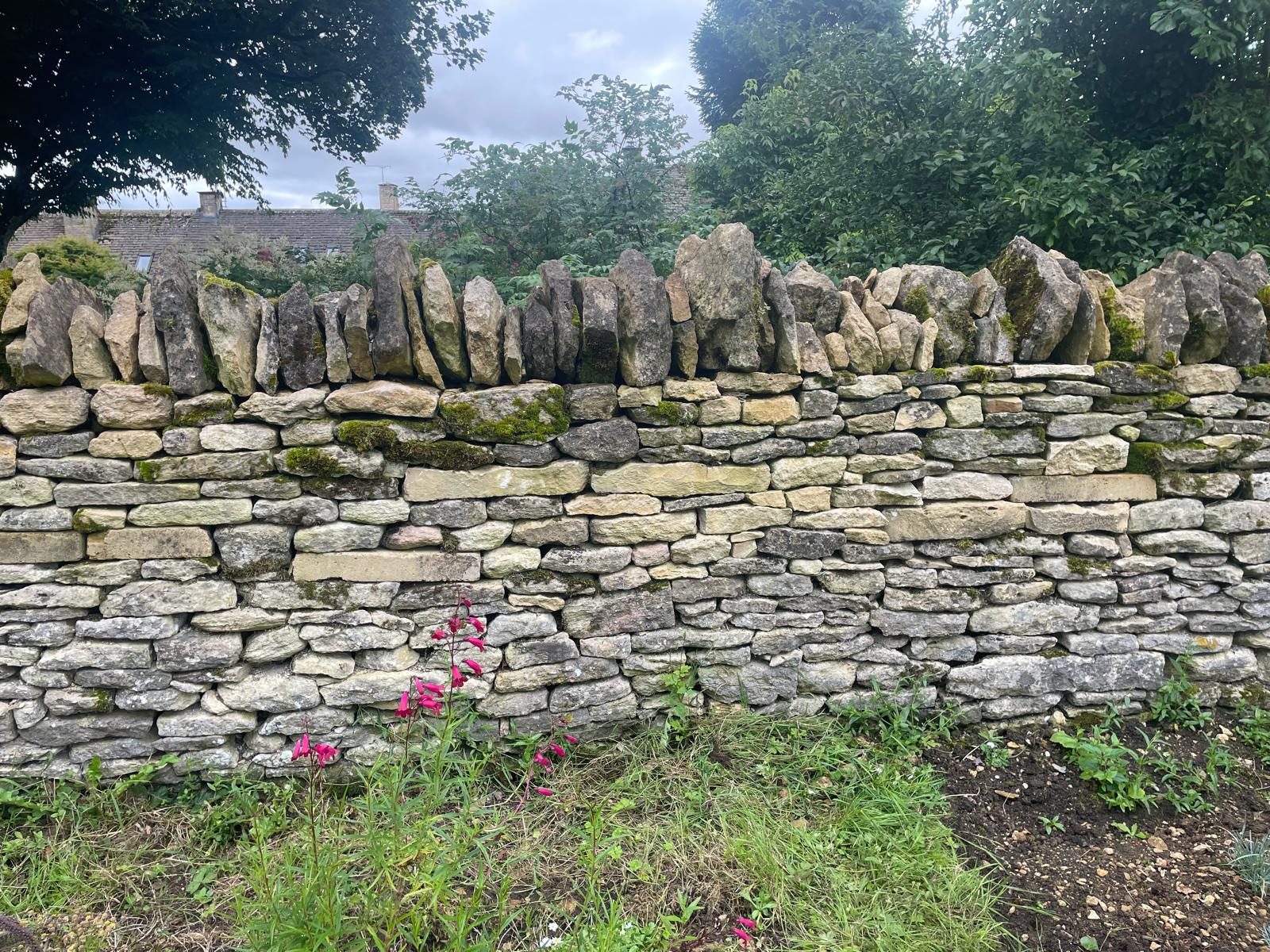
A garden wall doing what walls should: standing quietly for another century.
Why walls fail
Most failures come down to four causes. Time and weather: frost and rain slowly work stones loose, and a wall that has begun to bulge or “belly” is telling you its hearting has settled. Trees and ivy: roots lift foundations and push walls out of true — the churchyard wall at Great Rollright below had been carrying tree growth for decades. Vehicles and livestock: a single knock can spring a wall’s face. Poor earlier repairs: cement patches trap water in a structure built to drain, and usually make the next failure worse.
Why early repair is cheaper
A fresh gap is a small job: the fallen stone is all there, lying where it fell, and the wall either side is sound. Left for a few winters, the gap spreads, stone disappears or frost-shatters, and the collapsed section undermines its neighbours. The same wall that needed two days of work can come to need two weeks. If your wall has a fresh gap, the cheapest moment to fix it is now.
What a proper repair involves
A traditional repair takes the failed section back to sound wall, sorts the stone as it comes down — face stone, hearting, through stones, copes — then rebuilds dry: foundations checked, two faces battered inwards, joints crossed, hearted tight, through stones set, and coped. Done properly, the repair knits invisibly into the old wall and outlasts both of us. Your existing stone is almost always reused, which is also what keeps repairs affordable (see how walling is priced).
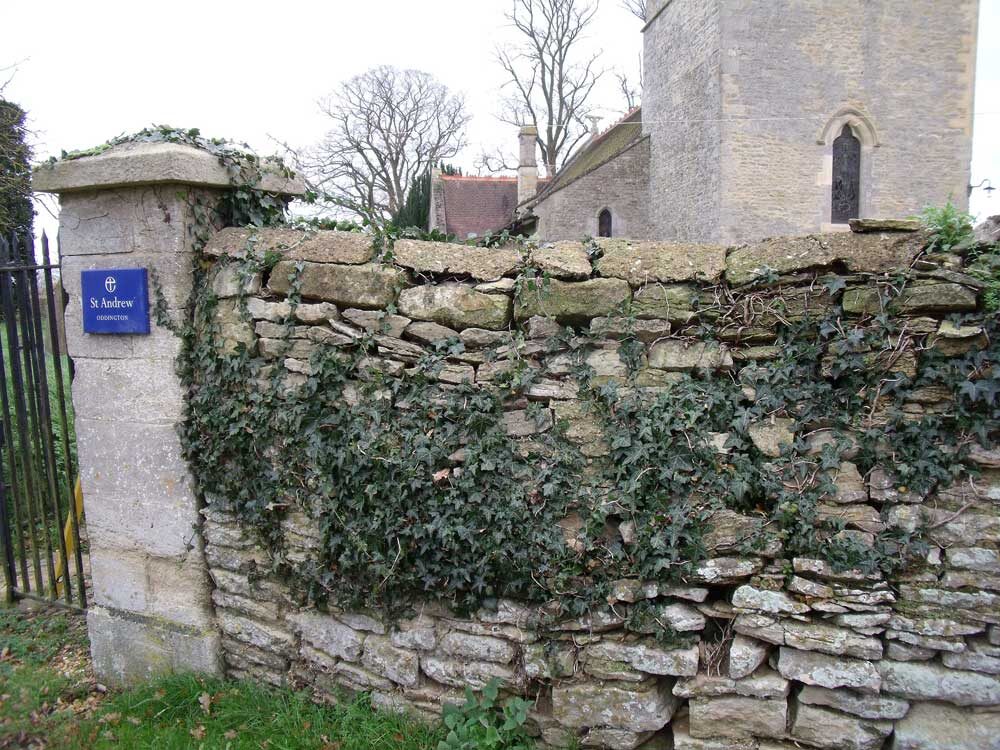
St Andrew’s, Oddington — before
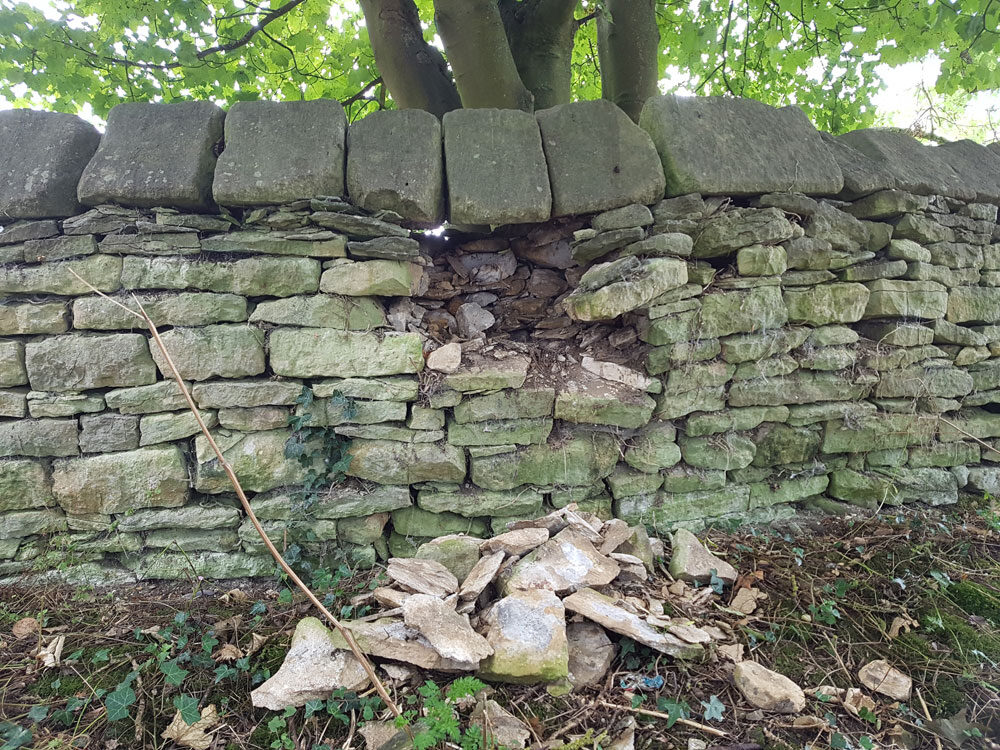
Great Rollright — before
Before-and-after: St Andrew’s, Oddington and Great Rollright church walls — both rebuilt dry from their own stone. See the projects →
RECENT REPAIRS
Anatomy of a repair
Most repairs start the same way: a gap, a pile of stone, and a wall either side that’s still sound. These are recent jobs — the collapse as we found it, and the wall as we left it. The stone is almost always the same stone, reused; the joint between old work and new disappears within a season or two of weather.
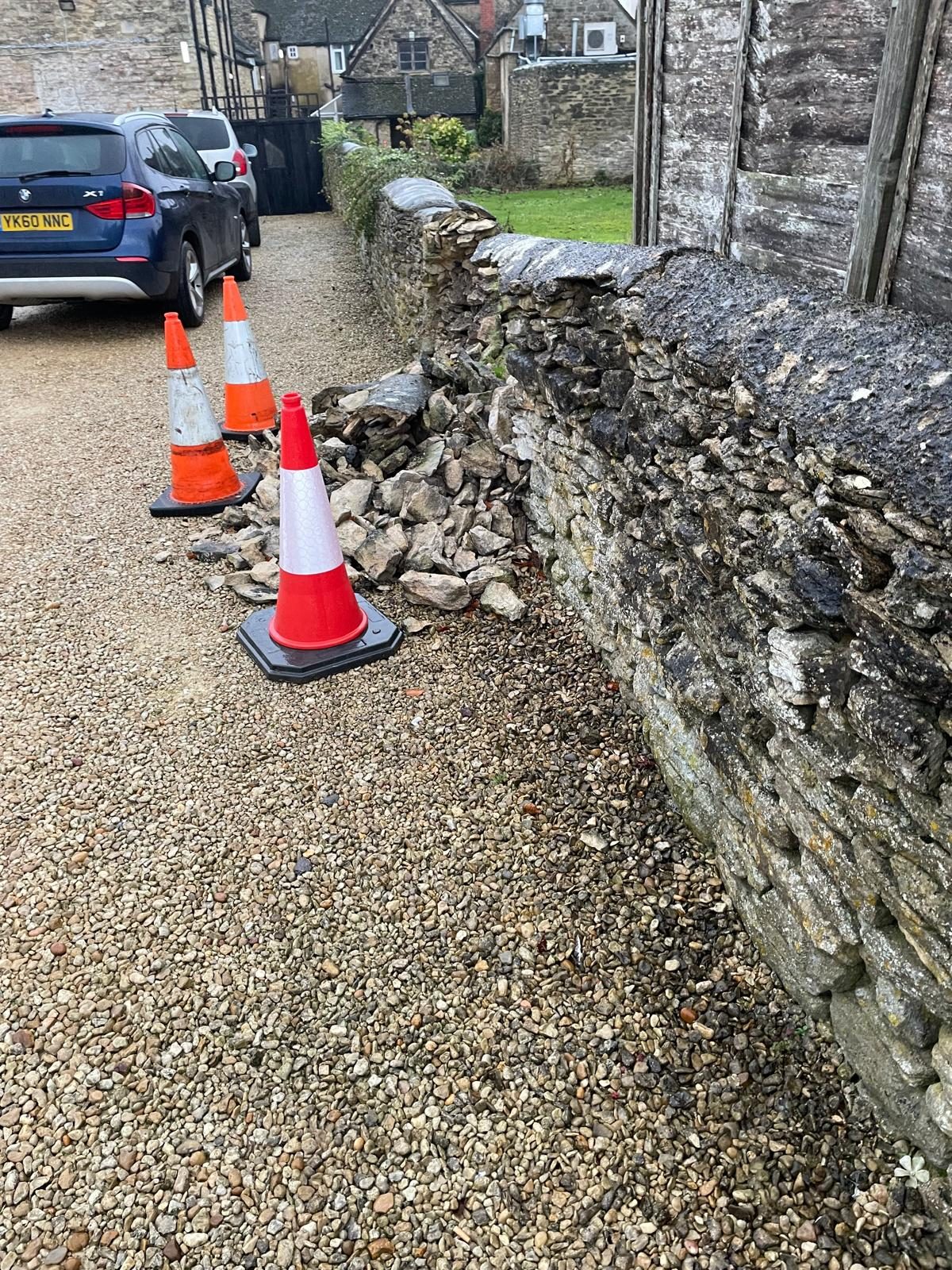
Before: a vehicle strike brought down the corner by the lane.
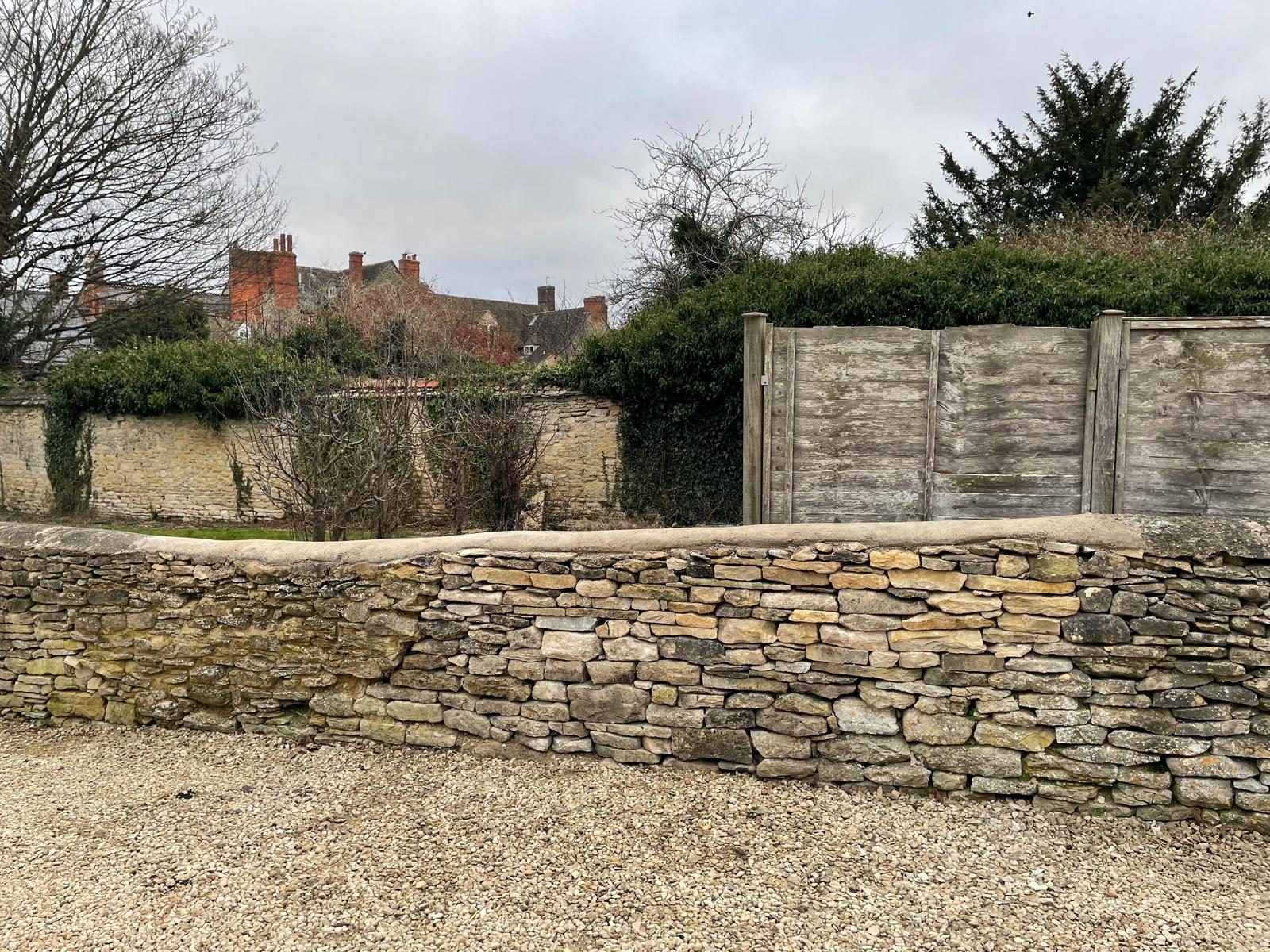
After: rebuilt dry with the same stone, knitted into the old coursing.
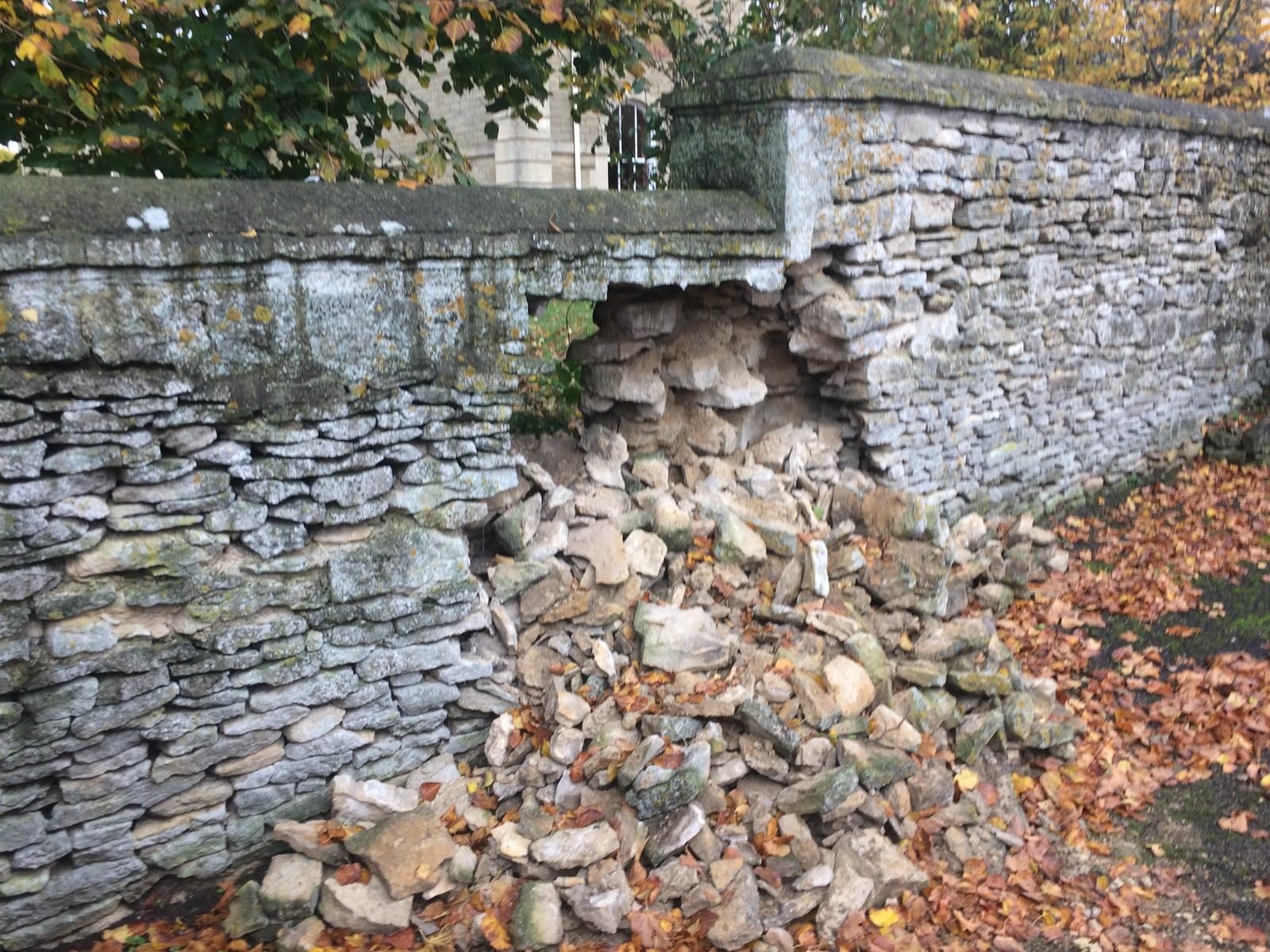
A winter collapse under a coped estate wall — the stone waits where it fell.
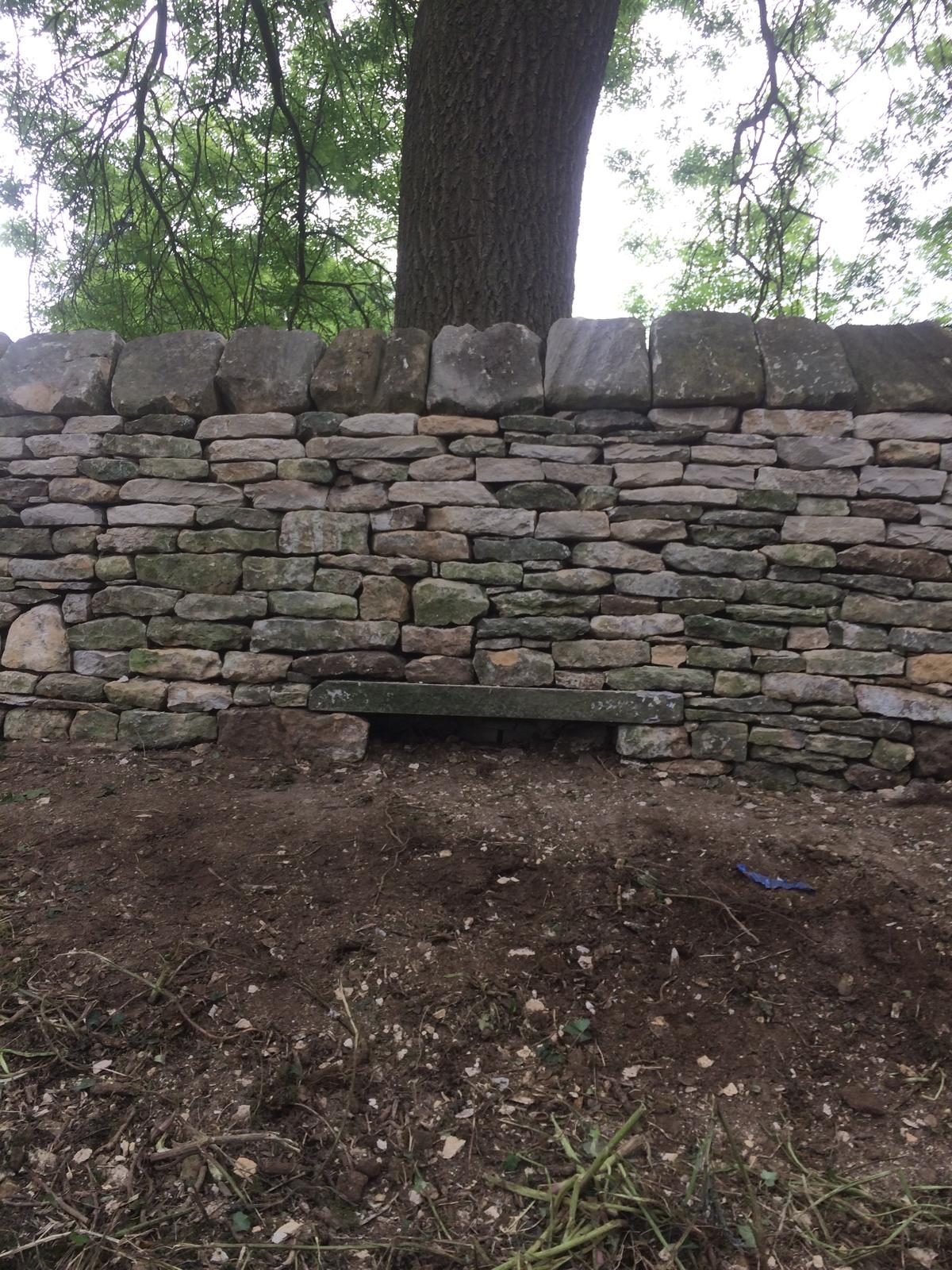
Rebuilt beneath the tree, the original through-slab reset in the new work.
Send a photo of your wall and arrange a free site visit →
Can I repair it myself?
Honestly — sometimes, yes. A low garden wall with a small gap is within reach of a careful amateur, and learning is a pleasure: Richard teaches a two-day course, listed on the official DSWA Cotswold Branch training calendar, at Dry Stone Training where you rebuild a real wall under instruction. For anything structural, retaining, tall, by a road, or historic (churchyards and listed settings need appropriate consents), have a professional look first.
The first step costs nothing
Send a photo of the wall to 07967 366153 or [email protected], or arrange a free site visit →. Every repair is quoted fixed, after inspection — and if it’s a smaller job than you feared, you’ll be told so.
Frequently asked questions
Can a collapsed dry stone wall be rebuilt with the same stone?
Almost always — reusing the original stone is standard practice and keeps cost down.
Should I repair a dry stone wall with cement?
No. Cement traps water in a structure designed to drain and usually accelerates the next failure. A dry rebuild is stronger and repairable forever.
How quickly should a gap be repaired?
Soon. Fresh gaps are small, cheap jobs; gaps left through winters spread and undermine the wall either side.
Do I need permission to repair my wall?
Usually not, but walls in conservation areas, around churchyards, or on listed property can need consent — part of what a site visit checks.